May 12, 2026
TikTok Workout Ideas To Build Fast, Fun, and Structured Routines
May 12, 2026
TikTok Workout Ideas To Build Fast, Fun, and Structured Routines
May 12, 2026
TikTok Workout Ideas To Build Fast, Fun, and Structured Routines
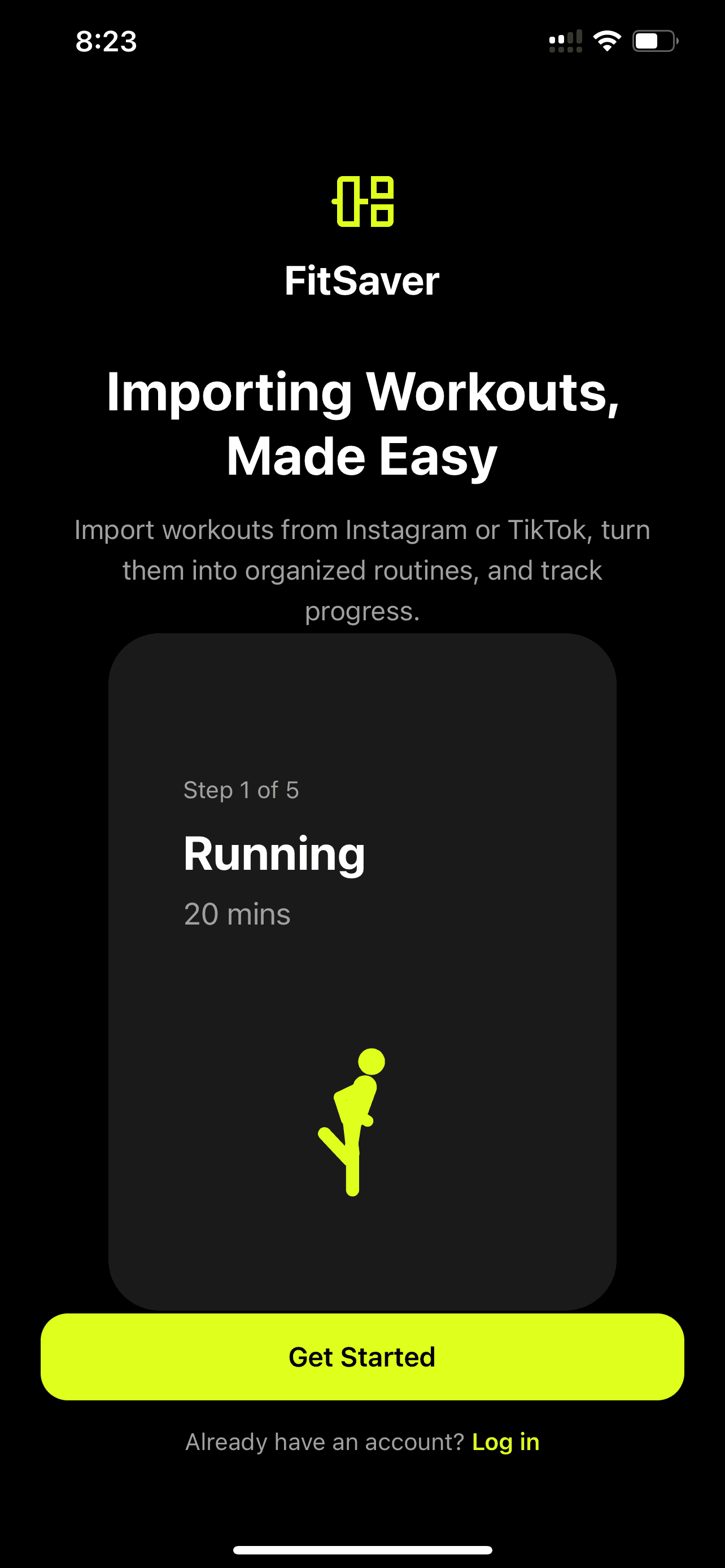
Short, high-energy clips on TikTok have changed how people discover workouts — and for good reason. This article gathers practical tiktok workout ideas and shows how those 15- to 60-second gems can become full, structured routines that fit into busy schedules. It also explains step-by-step how the Fitsaver App helps users import, organize, and follow TikTok and Instagram workouts using an in-app workout timer so those saved videos actually get used.
Why TikTok Workout Ideas Are So Popular
TikTok made fitness bite-sized, visual, and contagious. Creators compress a move, combo, or mini-circuit into a single clip, which makes ideas easy to scan and test. For the target audience — fitness enthusiasts aged 18–35 who live on social platforms — that quick-hit style feels approachable and exciting.
Benefits of using TikTok workouts:
They’re time-efficient and often require minimal equipment.
Creators constantly innovate, producing fresh combos and trends.
Visual cues make it easier to learn new moves fast.
Short clips lower the intimidation barrier for beginners.
Still, short clips aren’t full plans by themselves. The trick is to convert those snippets into progressive, safe, and trackable workouts — which is where structure and tools like Fitsaver come in.
How To Turn Short TikToks Into Full Workouts
Single TikTok clips often show a single move or a 30-second circuit. Turning them into a complete session requires a few deliberate steps:
Identify the purpose: Is the clip strength-focused, cardio, mobility, or a glute/ab finisher?
Choose duration and intensity: Decide whether it becomes a 10-minute burner or a 45-minute session component.
Build around it: Add warm-up, complementary exercises, rest intervals, and a cool-down.
Set progress markers: Reps, sets, EMOM/AMRAP targets, load progressions, or tempo changes.
Track and repeat: Log performance so the move evolves into progress, not a one-off trend.
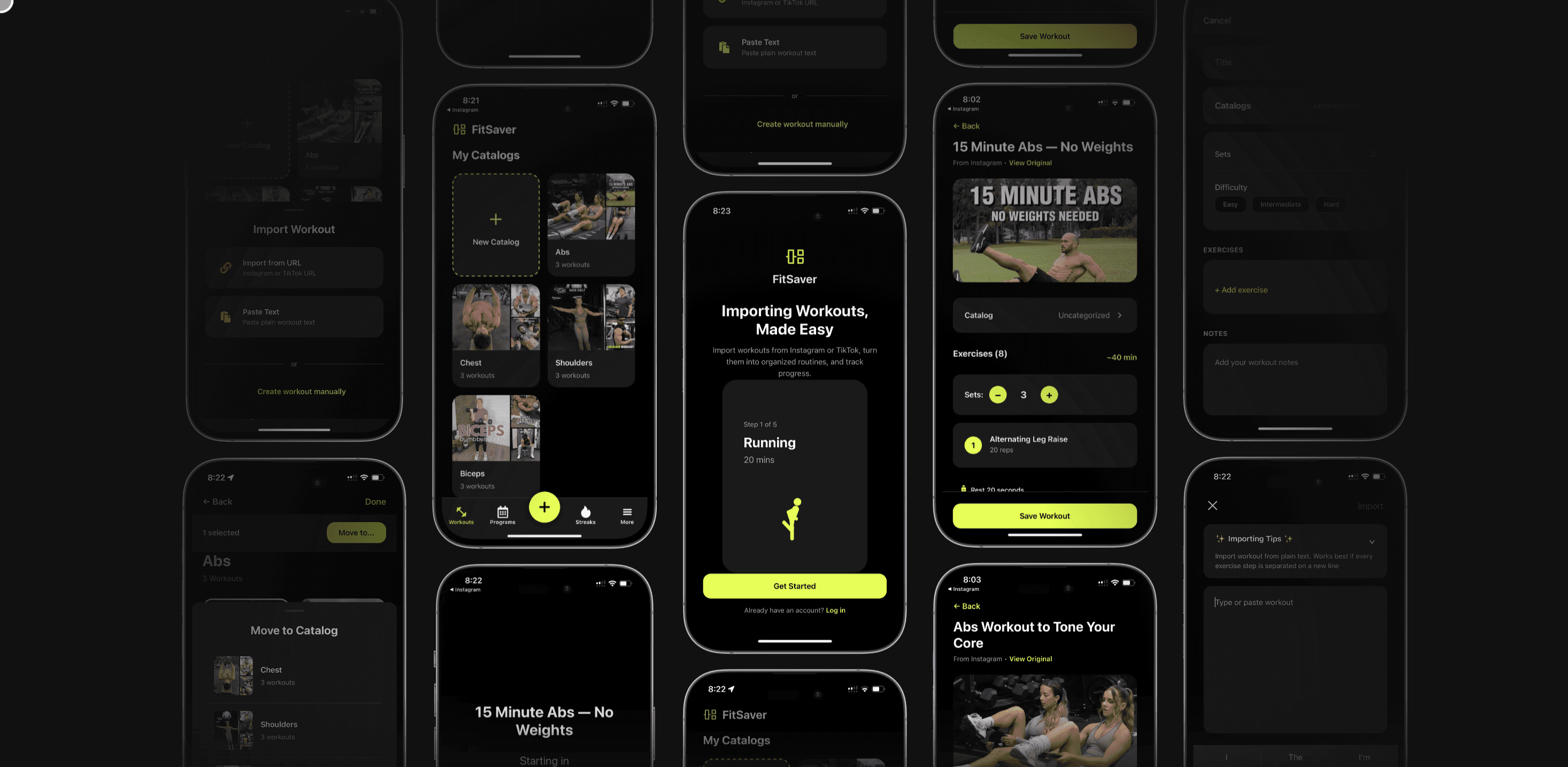
Fitsaver simplifies this process by letting users import the TikTok or Instagram clip, attach it to a workout as a step (with reps, sets, or timer), and then run the routine with an integrated timer and progress log.
Step-By-Step Example
Take a 20-second TikTok showing Bulgarian split squat pulses. Converting it might look like this:
Warm-up: 5 minutes dynamic leg swings, hip circles, light squat variations.
Main move: Bulgarian split squat pulses — 3 sets of 12 pulses per leg (use the imported TikTok as a visual reference).
Accessory: 3 sets of 10 reverse lunges per leg.
Conditioning finisher: 4 rounds of 30 seconds jump rope / 30 seconds rest.
Cool-down: 5 minutes hamstring and quad stretching.
In Fitsaver, users can save the split squat TikTok into a “Legs” catalog, add warm-up and accessory steps, set rest timers, and then follow the full routine without switching apps or searching for videos mid-workout.
20 TikTok Workout Ideas — Categorized and Ready to Use
Here are practical tiktok workout ideas grouped by goal. Each idea includes duration, equipment, and a short sample structure to help users get started.
Quick HIIT & Cardio
30-Second Tabata Burner — Equipment: none. Structure: 8 rounds, 20s work / 10s rest; exercises: burpees, mountain climbers, jump squats, high knees (rotate).
EMOM Cardio Blast — Equipment: jump rope optional. Structure: 10 minutes EMOM (minute 1: 40s jump rope, minute 2: 40s alternating lunges).
Dance Cardio Mashup — Equipment: none. Structure: 15–20 minutes choreography-based intervals, alternate high-intensity sections with 30s active rest.
Strength With Minimal Equipment
3-Move Dumbbell Circuit — Equipment: pair of dumbbells. Structure: 4 rounds of 12 goblet squats, 10 bent-over rows, 8 single-arm overhead presses.
Resistance Band Lower-Body — Equipment: loop band. Structure: 3 sets of 15 banded glute bridges, 12 banded lateral walks, 10 banded Romanian deadlifts.
Upper-Body Push-Pull Split — Equipment: dumbbells/bands. Structure: push day — 4 sets push-ups, shoulder press; pull day — 4 sets bent-over rows, single-arm rows.
Bodyweight & Core
10-Minute Core Crusher — Equipment: mat. Structure: 3 rounds of 30s plank, 20 bicycle crunches, 15 leg raises, 30s hollow hold.
AMRAP 12 — Equipment: none. Structure: As many rounds as possible in 12 minutes — 10 squats, 8 push-ups, 6 burpees.
Lower-Impact Strength — Equipment: none. Structure: slow tempo bodyweight squats, glute bridges, calf raises with focus on control.
Glute- and Leg-Focused
Pulse + Burn Glute Session — Equipment: band and dumbbell optional. Structure: 3 sets per exercise — pulses, hip thrusts, Bulgarian split squats, monster walks.
Stair Sprint Set — Equipment: stairs. Structure: 8 sprints up, walk down recovery; pair with lunges or step-ups for strength.
Mobility, Recovery, and Low-Impact
10-Minute Morning Mobility — Equipment: mat. Structure: hip openers, thoracic rotations, cat-cow flow, ankle mobility drills.
Stretch & Reset — Equipment: foam roller optional. Structure: 20–30 minutes of rolling, targeted stretches, and breathing work.
Sample Workouts Users Can Save From TikTok Clips
Below are three concrete, ready-to-follow workouts that work great when built around a TikTok clip used as a visual demo.
15-Minute Full-Body MetCon (Beginner-Friendly)
Warm-up: 3 minutes dynamic mobility
Main (3 rounds): 40s work / 20s rest each — jump squats, incline push-ups, plank shoulder taps, alternating reverse lunges
Cool-down: 3 minutes light stretching
30-Minute Strength Split (Lower Body)
Warm-up: 5 minutes band work and bodyweight squats
Main: 4 sets — 8–10 barbell/dumbbell squats, 12 Bulgarian split squats (each leg), 15 glute bridges
Finisher: 3 sets 30s monster walk band
Cool-down: 5 minutes hamstring/quadriceps stretches
20-Minute Core + Mobility (No Equipment)
Warm-up: 2 minutes light cardio
Main: 4 rounds — 30s plank, 20 bicycle crunches, 15 bird dogs (each side), 30s hollow hold
Mobility: 6 minutes targeted hip and thoracic mobility
Each of these can be created from a TikTok demonstration: import the demo into Fitsaver, attach it to the relevant step, set timers and reps, and run the workout through the app’s built-in timer and logger.
How To Progress TikTok-Inspired Routines
Trendy TikTok moves can stall progress if they’re treated as static tricks. Progression keeps workouts effective and safe.
Increase load or resistance: Add weight, heavier bands, or slower tempo.
Increase volume: More sets or rounds, or longer work intervals.
Change tempo: Slow eccentric phases to boost time under tension.
Complexify movements: Pair moves into supersets or add unilateral variants.
Track performance: Log reps, weight, RPE (rate of perceived exertion), and notes each session.
Fitsaver’s tracking features let users record sets, loads, and notes directly in the routine, so each imported TikTok move becomes part of a measurable progression plan rather than a one-off trend.
Safety, Warm-Ups, and Modifications
Visuals on TikTok sometimes omit crucial form cues. Here’s how users can stay safe and effective.
Always warm up: 5–10 minutes of movement that addresses the joints and muscle groups about to be trained.
Check form: Use slow reps first and mirror the creator’s key alignment cues; if form is unclear, choose a verified tutorial or a certified trainer’s video.
Modify intelligently: Swap high-impact moves for low-impact alternatives (e.g., step-backs for jump lunges) or reduce range if a joint is irritated.
Rest and recovery: Schedule rest days and include mobility sessions to reduce injury risk.
When users import a clip into Fitsaver, they can add a note with specific form cues or modification options to consult during the set.
Equipment That Makes TikTok Workouts More Versatile
Many effective TikTok workouts use minimal gear. A compact kit expands what a 60-second clip can deliver in a full program.
Pair of adjustable dumbbells
Resistance bands (loop and long band)
Jump rope
Yoga mat and foam roller
Step or bench
Fitsaver allows tagging routines by equipment so users can filter by “no equipment,” “band,” or “dumbbell” when building a plan from imported videos.
How Fitsaver App Fits Into the TikTok Workout Flow
Fitsaver is built for people who find great workout clips on TikTok and Instagram but then lose them in saved lists. The app turns scattered videos into organized, actionable sessions.
Key Fitsaver Features Relevant to TikTok Workouts
Import from TikTok and Instagram: Save video links directly into the app as a visual reference step.
Catalog folders: Organize imports into folders like “Leg Days,” “Quick HIIT,” or “Mobility.”
Convert videos to steps: Attach reps, sets, timers, and rest periods to each imported clip.
Workout timer & guided sessions: Run routines hands-free with on-screen timers and cues.
Progress tracking: Log weights, reps, RPE, and personal notes after each session.
Offline access: Save video references for gyms without Wi‑Fi.
Step-By-Step: Import a TikTok Workout and Run It in Fitsaver
Copy the TikTok or Instagram workout video link from the social app.
Open Fitsaver and tap “Import” then paste the link. The video thumbnail and title populate automatically.
Place the imported video into a catalog folder (for example, “Quick 20s HIIT” or “Upper Body”).
Add the video as a step in a workout — specify whether it’s a demo-only step, a timed interval, or X reps / Y sets.
Build the rest of the workout around it: warm-up steps, accessory moves, and cool-downs.
Set the workout timer, rest intervals, and any AMRAP/EMOM rules.
Tap start: the guided timer counts down and displays the imported video for reference between sets.
After the workout, log weights, reps, and notes. The routine and attached video stay in the catalog for future use.
This flow prevents mid-workout distraction and fragmentation — everything from the demo to the timer and tracking lives in one place.
How To Find High-Quality TikTok Workout Videos
Not every viral clip is safe or effective. Here’s how fitness-minded users can spot valuable content:
Check credentials: Look for creators who list certifications or a coaching background in their bio.
Read comments: Helpful comments often point out form cues or adjustments.
Search specific hashtags: Use targeted tags like #homeworkout, #dumbbellworkout, #mobility, #beginnerworkout, or #gluteworkout.
Prefer creators who show full reps: Videos that zoom in on form, include slow-motion, or give clear cues are more reliable.
Cross-reference: If the move seems risky, search for a longer tutorial on YouTube or a certified trainer’s page.
Once a user identifies a high-quality clip, importing it into Fitsaver and adding form notes provides an on-device safety reminder during workouts.
Creating TikTok Workouts That People Want To Follow
Some users will want to make their own TikTok workouts. Practical tips that both creators and exercisers will appreciate:
Keep it simple: Focus on clear, repeatable moves rather than complex choreography for beginner audiences.
Show key cues: Mention alignment, breathing, and common mistakes in captions or voiceovers.
Use timestamps or text overlays: Add sets, reps, or tempo details in the video so viewers know how to structure the move.
Link to fuller content: Direct viewers to a longer routine hosted in an app, blog, or video so they can follow a complete session.
Creators who want users to actually follow their workouts might invite them to import the clip into tools like Fitsaver, which helps turn a demo into a guided session with timers and tracking.
Sample 4-Week Plan Built From TikTok Clips
Here’s a compact 4-week progression that uses TikTok clips as movement demos and Fitsaver as the organizational backbone. Ideal for busy people who want structure.
Weeks 1–2 (Foundation) — 3 workouts/week: two strength sessions (upper/lower) + one 20-minute HIIT. Focus on form and consistent logging.
Week 3 (Intensity Bump) — 4 workouts/week: add a second HIIT or a mobility session. Increase load slightly on strength moves.
Week 4 (Deload & Test) — 3 workouts: keep intensity moderate, test one maximal set for a measure (reps or weight), and focus on recovery.
Fitsaver helps by organizing the imported demo clips into week folders, attaching rest and timer settings, and capturing progress to measure improvement at the end of Week 4.
Common Mistakes When Using TikTok Workout Ideas
Awareness of pitfalls reduces wasted time and injuries:
Chasing trends over goals: Random viral moves won’t align with long-term objectives.
Skipping structure: A collection of cool moves isn’t a program unless it includes progression and recovery.
Over-reliance on complex moves: Prioritize foundational strength and mobility before advanced variations.
Not tracking progress: Without tracking, it’s impossible to know whether the routines drive real gains.
Organizational tools like Fitsaver solve the “saved but unused” problem by making trends actionable and trackable.
How To Make TikTok Workouts Fit Real Schedules
Time is the most common constraint. Here are realistic approaches for busy schedules:
Micro-workouts: Two 10–12 minute sessions (morning and evening) can equal a longer workout if structured properly.
Commute or lunch breaks: Save 15-minute HIIT or mobility clips into a “Quick” folder for on-demand use.
Weekend consolidation: One longer 40–60 minute session can provide depth if weekdays are packed.
Fitsaver’s folder and timer features make it easy to filter for quick or long sessions depending on the day’s schedule.
Conclusion
TikTok workout ideas are a rich source of creative, time-efficient movement — but they need structure to become progress-driving routines. By converting short clips into full workouts, tracking progress, and sticking to safety and progression principles, users can make viral fitness trends actually work for them. The Fitsaver App is built to bridge the gap between saved videos and consistent training: users can import TikTok and Instagram clips, organize them into catalog folders, attach sets and timers, and run guided workouts without distractions. For anyone juggling a busy life who still wants to train smart, turning favorite TikTok moves into organized routines is an efficient, motivating path forward.
Frequently Asked Questions
Can TikTok workouts replace a traditional training plan?
TikTok workouts can supplement or kickstart a training plan, especially for short-term goals or variety. However, for long-term progression — particularly in strength or hypertrophy — a structured program with deliberate progression, recovery periods, and load management is preferable. Using TikTok clips as demos within a broader plan (and tracking progress) makes them far more effective.
How should beginners pick TikTok workout videos?
Beginners should prioritize creators who explain form, use clear cues, and offer regressions. Look for shorter, simpler movements and combine them into low-volume sessions. Import the clip into an organizer like Fitsaver with modification notes, and start slow to build consistency and confidence.
What’s the best way to track progress from TikTok-inspired workouts?
Track metrics such as reps, sets, load (weight), time under tension, AMRAP counts, and perceived exertion. Logs should also include notes on form and discomfort. Apps like Fitsaver allow users to attach these metrics to each routine and revisit them to see clear progress over time.
Is it safe to follow strangers’ TikTok workouts?
Safety depends on the accuracy of the demonstration and the user’s baseline fitness. If a move looks advanced, find a regression or a more detailed tutorial from a certified trainer. Always prioritize proper warm-ups, listen to the body, and stop if pain (not to be confused with muscle fatigue) occurs.
How does Fitsaver handle social app imports if the video is removed?
Fitsaver saves the video reference and any user-added notes in the app’s catalog. If the original clip is removed from the social platform, the user still retains the workout structure, timers, and notes they built around that video. Users are encouraged to add personal form notes or short uploads to maintain a permanent reference.
Short, high-energy clips on TikTok have changed how people discover workouts — and for good reason. This article gathers practical tiktok workout ideas and shows how those 15- to 60-second gems can become full, structured routines that fit into busy schedules. It also explains step-by-step how the Fitsaver App helps users import, organize, and follow TikTok and Instagram workouts using an in-app workout timer so those saved videos actually get used.
Why TikTok Workout Ideas Are So Popular
TikTok made fitness bite-sized, visual, and contagious. Creators compress a move, combo, or mini-circuit into a single clip, which makes ideas easy to scan and test. For the target audience — fitness enthusiasts aged 18–35 who live on social platforms — that quick-hit style feels approachable and exciting.
Benefits of using TikTok workouts:
They’re time-efficient and often require minimal equipment.
Creators constantly innovate, producing fresh combos and trends.
Visual cues make it easier to learn new moves fast.
Short clips lower the intimidation barrier for beginners.
Still, short clips aren’t full plans by themselves. The trick is to convert those snippets into progressive, safe, and trackable workouts — which is where structure and tools like Fitsaver come in.
How To Turn Short TikToks Into Full Workouts
Single TikTok clips often show a single move or a 30-second circuit. Turning them into a complete session requires a few deliberate steps:
Identify the purpose: Is the clip strength-focused, cardio, mobility, or a glute/ab finisher?
Choose duration and intensity: Decide whether it becomes a 10-minute burner or a 45-minute session component.
Build around it: Add warm-up, complementary exercises, rest intervals, and a cool-down.
Set progress markers: Reps, sets, EMOM/AMRAP targets, load progressions, or tempo changes.
Track and repeat: Log performance so the move evolves into progress, not a one-off trend.
Fitsaver simplifies this process by letting users import the TikTok or Instagram clip, attach it to a workout as a step (with reps, sets, or timer), and then run the routine with an integrated timer and progress log.
Step-By-Step Example
Take a 20-second TikTok showing Bulgarian split squat pulses. Converting it might look like this:
Warm-up: 5 minutes dynamic leg swings, hip circles, light squat variations.
Main move: Bulgarian split squat pulses — 3 sets of 12 pulses per leg (use the imported TikTok as a visual reference).
Accessory: 3 sets of 10 reverse lunges per leg.
Conditioning finisher: 4 rounds of 30 seconds jump rope / 30 seconds rest.
Cool-down: 5 minutes hamstring and quad stretching.
In Fitsaver, users can save the split squat TikTok into a “Legs” catalog, add warm-up and accessory steps, set rest timers, and then follow the full routine without switching apps or searching for videos mid-workout.
20 TikTok Workout Ideas — Categorized and Ready to Use
Here are practical tiktok workout ideas grouped by goal. Each idea includes duration, equipment, and a short sample structure to help users get started.
Quick HIIT & Cardio
30-Second Tabata Burner — Equipment: none. Structure: 8 rounds, 20s work / 10s rest; exercises: burpees, mountain climbers, jump squats, high knees (rotate).
EMOM Cardio Blast — Equipment: jump rope optional. Structure: 10 minutes EMOM (minute 1: 40s jump rope, minute 2: 40s alternating lunges).
Dance Cardio Mashup — Equipment: none. Structure: 15–20 minutes choreography-based intervals, alternate high-intensity sections with 30s active rest.
Strength With Minimal Equipment
3-Move Dumbbell Circuit — Equipment: pair of dumbbells. Structure: 4 rounds of 12 goblet squats, 10 bent-over rows, 8 single-arm overhead presses.
Resistance Band Lower-Body — Equipment: loop band. Structure: 3 sets of 15 banded glute bridges, 12 banded lateral walks, 10 banded Romanian deadlifts.
Upper-Body Push-Pull Split — Equipment: dumbbells/bands. Structure: push day — 4 sets push-ups, shoulder press; pull day — 4 sets bent-over rows, single-arm rows.
Bodyweight & Core
10-Minute Core Crusher — Equipment: mat. Structure: 3 rounds of 30s plank, 20 bicycle crunches, 15 leg raises, 30s hollow hold.
AMRAP 12 — Equipment: none. Structure: As many rounds as possible in 12 minutes — 10 squats, 8 push-ups, 6 burpees.
Lower-Impact Strength — Equipment: none. Structure: slow tempo bodyweight squats, glute bridges, calf raises with focus on control.
Glute- and Leg-Focused
Pulse + Burn Glute Session — Equipment: band and dumbbell optional. Structure: 3 sets per exercise — pulses, hip thrusts, Bulgarian split squats, monster walks.
Stair Sprint Set — Equipment: stairs. Structure: 8 sprints up, walk down recovery; pair with lunges or step-ups for strength.
Mobility, Recovery, and Low-Impact
10-Minute Morning Mobility — Equipment: mat. Structure: hip openers, thoracic rotations, cat-cow flow, ankle mobility drills.
Stretch & Reset — Equipment: foam roller optional. Structure: 20–30 minutes of rolling, targeted stretches, and breathing work.
Sample Workouts Users Can Save From TikTok Clips
Below are three concrete, ready-to-follow workouts that work great when built around a TikTok clip used as a visual demo.
15-Minute Full-Body MetCon (Beginner-Friendly)
Warm-up: 3 minutes dynamic mobility
Main (3 rounds): 40s work / 20s rest each — jump squats, incline push-ups, plank shoulder taps, alternating reverse lunges
Cool-down: 3 minutes light stretching
30-Minute Strength Split (Lower Body)
Warm-up: 5 minutes band work and bodyweight squats
Main: 4 sets — 8–10 barbell/dumbbell squats, 12 Bulgarian split squats (each leg), 15 glute bridges
Finisher: 3 sets 30s monster walk band
Cool-down: 5 minutes hamstring/quadriceps stretches
20-Minute Core + Mobility (No Equipment)
Warm-up: 2 minutes light cardio
Main: 4 rounds — 30s plank, 20 bicycle crunches, 15 bird dogs (each side), 30s hollow hold
Mobility: 6 minutes targeted hip and thoracic mobility
Each of these can be created from a TikTok demonstration: import the demo into Fitsaver, attach it to the relevant step, set timers and reps, and run the workout through the app’s built-in timer and logger.
How To Progress TikTok-Inspired Routines
Trendy TikTok moves can stall progress if they’re treated as static tricks. Progression keeps workouts effective and safe.
Increase load or resistance: Add weight, heavier bands, or slower tempo.
Increase volume: More sets or rounds, or longer work intervals.
Change tempo: Slow eccentric phases to boost time under tension.
Complexify movements: Pair moves into supersets or add unilateral variants.
Track performance: Log reps, weight, RPE (rate of perceived exertion), and notes each session.
Fitsaver’s tracking features let users record sets, loads, and notes directly in the routine, so each imported TikTok move becomes part of a measurable progression plan rather than a one-off trend.
Safety, Warm-Ups, and Modifications
Visuals on TikTok sometimes omit crucial form cues. Here’s how users can stay safe and effective.
Always warm up: 5–10 minutes of movement that addresses the joints and muscle groups about to be trained.
Check form: Use slow reps first and mirror the creator’s key alignment cues; if form is unclear, choose a verified tutorial or a certified trainer’s video.
Modify intelligently: Swap high-impact moves for low-impact alternatives (e.g., step-backs for jump lunges) or reduce range if a joint is irritated.
Rest and recovery: Schedule rest days and include mobility sessions to reduce injury risk.
When users import a clip into Fitsaver, they can add a note with specific form cues or modification options to consult during the set.
Equipment That Makes TikTok Workouts More Versatile
Many effective TikTok workouts use minimal gear. A compact kit expands what a 60-second clip can deliver in a full program.
Pair of adjustable dumbbells
Resistance bands (loop and long band)
Jump rope
Yoga mat and foam roller
Step or bench
Fitsaver allows tagging routines by equipment so users can filter by “no equipment,” “band,” or “dumbbell” when building a plan from imported videos.
How Fitsaver App Fits Into the TikTok Workout Flow
Fitsaver is built for people who find great workout clips on TikTok and Instagram but then lose them in saved lists. The app turns scattered videos into organized, actionable sessions.
Key Fitsaver Features Relevant to TikTok Workouts
Import from TikTok and Instagram: Save video links directly into the app as a visual reference step.
Catalog folders: Organize imports into folders like “Leg Days,” “Quick HIIT,” or “Mobility.”
Convert videos to steps: Attach reps, sets, timers, and rest periods to each imported clip.
Workout timer & guided sessions: Run routines hands-free with on-screen timers and cues.
Progress tracking: Log weights, reps, RPE, and personal notes after each session.
Offline access: Save video references for gyms without Wi‑Fi.
Step-By-Step: Import a TikTok Workout and Run It in Fitsaver
Copy the TikTok or Instagram workout video link from the social app.
Open Fitsaver and tap “Import” then paste the link. The video thumbnail and title populate automatically.
Place the imported video into a catalog folder (for example, “Quick 20s HIIT” or “Upper Body”).
Add the video as a step in a workout — specify whether it’s a demo-only step, a timed interval, or X reps / Y sets.
Build the rest of the workout around it: warm-up steps, accessory moves, and cool-downs.
Set the workout timer, rest intervals, and any AMRAP/EMOM rules.
Tap start: the guided timer counts down and displays the imported video for reference between sets.
After the workout, log weights, reps, and notes. The routine and attached video stay in the catalog for future use.
This flow prevents mid-workout distraction and fragmentation — everything from the demo to the timer and tracking lives in one place.
How To Find High-Quality TikTok Workout Videos
Not every viral clip is safe or effective. Here’s how fitness-minded users can spot valuable content:
Check credentials: Look for creators who list certifications or a coaching background in their bio.
Read comments: Helpful comments often point out form cues or adjustments.
Search specific hashtags: Use targeted tags like #homeworkout, #dumbbellworkout, #mobility, #beginnerworkout, or #gluteworkout.
Prefer creators who show full reps: Videos that zoom in on form, include slow-motion, or give clear cues are more reliable.
Cross-reference: If the move seems risky, search for a longer tutorial on YouTube or a certified trainer’s page.
Once a user identifies a high-quality clip, importing it into Fitsaver and adding form notes provides an on-device safety reminder during workouts.
Creating TikTok Workouts That People Want To Follow
Some users will want to make their own TikTok workouts. Practical tips that both creators and exercisers will appreciate:
Keep it simple: Focus on clear, repeatable moves rather than complex choreography for beginner audiences.
Show key cues: Mention alignment, breathing, and common mistakes in captions or voiceovers.
Use timestamps or text overlays: Add sets, reps, or tempo details in the video so viewers know how to structure the move.
Link to fuller content: Direct viewers to a longer routine hosted in an app, blog, or video so they can follow a complete session.
Creators who want users to actually follow their workouts might invite them to import the clip into tools like Fitsaver, which helps turn a demo into a guided session with timers and tracking.
Sample 4-Week Plan Built From TikTok Clips
Here’s a compact 4-week progression that uses TikTok clips as movement demos and Fitsaver as the organizational backbone. Ideal for busy people who want structure.
Weeks 1–2 (Foundation) — 3 workouts/week: two strength sessions (upper/lower) + one 20-minute HIIT. Focus on form and consistent logging.
Week 3 (Intensity Bump) — 4 workouts/week: add a second HIIT or a mobility session. Increase load slightly on strength moves.
Week 4 (Deload & Test) — 3 workouts: keep intensity moderate, test one maximal set for a measure (reps or weight), and focus on recovery.
Fitsaver helps by organizing the imported demo clips into week folders, attaching rest and timer settings, and capturing progress to measure improvement at the end of Week 4.
Common Mistakes When Using TikTok Workout Ideas
Awareness of pitfalls reduces wasted time and injuries:
Chasing trends over goals: Random viral moves won’t align with long-term objectives.
Skipping structure: A collection of cool moves isn’t a program unless it includes progression and recovery.
Over-reliance on complex moves: Prioritize foundational strength and mobility before advanced variations.
Not tracking progress: Without tracking, it’s impossible to know whether the routines drive real gains.
Organizational tools like Fitsaver solve the “saved but unused” problem by making trends actionable and trackable.
How To Make TikTok Workouts Fit Real Schedules
Time is the most common constraint. Here are realistic approaches for busy schedules:
Micro-workouts: Two 10–12 minute sessions (morning and evening) can equal a longer workout if structured properly.
Commute or lunch breaks: Save 15-minute HIIT or mobility clips into a “Quick” folder for on-demand use.
Weekend consolidation: One longer 40–60 minute session can provide depth if weekdays are packed.
Fitsaver’s folder and timer features make it easy to filter for quick or long sessions depending on the day’s schedule.
Conclusion
TikTok workout ideas are a rich source of creative, time-efficient movement — but they need structure to become progress-driving routines. By converting short clips into full workouts, tracking progress, and sticking to safety and progression principles, users can make viral fitness trends actually work for them. The Fitsaver App is built to bridge the gap between saved videos and consistent training: users can import TikTok and Instagram clips, organize them into catalog folders, attach sets and timers, and run guided workouts without distractions. For anyone juggling a busy life who still wants to train smart, turning favorite TikTok moves into organized routines is an efficient, motivating path forward.
Frequently Asked Questions
Can TikTok workouts replace a traditional training plan?
TikTok workouts can supplement or kickstart a training plan, especially for short-term goals or variety. However, for long-term progression — particularly in strength or hypertrophy — a structured program with deliberate progression, recovery periods, and load management is preferable. Using TikTok clips as demos within a broader plan (and tracking progress) makes them far more effective.
How should beginners pick TikTok workout videos?
Beginners should prioritize creators who explain form, use clear cues, and offer regressions. Look for shorter, simpler movements and combine them into low-volume sessions. Import the clip into an organizer like Fitsaver with modification notes, and start slow to build consistency and confidence.
What’s the best way to track progress from TikTok-inspired workouts?
Track metrics such as reps, sets, load (weight), time under tension, AMRAP counts, and perceived exertion. Logs should also include notes on form and discomfort. Apps like Fitsaver allow users to attach these metrics to each routine and revisit them to see clear progress over time.
Is it safe to follow strangers’ TikTok workouts?
Safety depends on the accuracy of the demonstration and the user’s baseline fitness. If a move looks advanced, find a regression or a more detailed tutorial from a certified trainer. Always prioritize proper warm-ups, listen to the body, and stop if pain (not to be confused with muscle fatigue) occurs.
How does Fitsaver handle social app imports if the video is removed?
Fitsaver saves the video reference and any user-added notes in the app’s catalog. If the original clip is removed from the social platform, the user still retains the workout structure, timers, and notes they built around that video. Users are encouraged to add personal form notes or short uploads to maintain a permanent reference.
Short, high-energy clips on TikTok have changed how people discover workouts — and for good reason. This article gathers practical tiktok workout ideas and shows how those 15- to 60-second gems can become full, structured routines that fit into busy schedules. It also explains step-by-step how the Fitsaver App helps users import, organize, and follow TikTok and Instagram workouts using an in-app workout timer so those saved videos actually get used.
Why TikTok Workout Ideas Are So Popular
TikTok made fitness bite-sized, visual, and contagious. Creators compress a move, combo, or mini-circuit into a single clip, which makes ideas easy to scan and test. For the target audience — fitness enthusiasts aged 18–35 who live on social platforms — that quick-hit style feels approachable and exciting.
Benefits of using TikTok workouts:
They’re time-efficient and often require minimal equipment.
Creators constantly innovate, producing fresh combos and trends.
Visual cues make it easier to learn new moves fast.
Short clips lower the intimidation barrier for beginners.
Still, short clips aren’t full plans by themselves. The trick is to convert those snippets into progressive, safe, and trackable workouts — which is where structure and tools like Fitsaver come in.
How To Turn Short TikToks Into Full Workouts
Single TikTok clips often show a single move or a 30-second circuit. Turning them into a complete session requires a few deliberate steps:
Identify the purpose: Is the clip strength-focused, cardio, mobility, or a glute/ab finisher?
Choose duration and intensity: Decide whether it becomes a 10-minute burner or a 45-minute session component.
Build around it: Add warm-up, complementary exercises, rest intervals, and a cool-down.
Set progress markers: Reps, sets, EMOM/AMRAP targets, load progressions, or tempo changes.
Track and repeat: Log performance so the move evolves into progress, not a one-off trend.
Fitsaver simplifies this process by letting users import the TikTok or Instagram clip, attach it to a workout as a step (with reps, sets, or timer), and then run the routine with an integrated timer and progress log.
Step-By-Step Example
Take a 20-second TikTok showing Bulgarian split squat pulses. Converting it might look like this:
Warm-up: 5 minutes dynamic leg swings, hip circles, light squat variations.
Main move: Bulgarian split squat pulses — 3 sets of 12 pulses per leg (use the imported TikTok as a visual reference).
Accessory: 3 sets of 10 reverse lunges per leg.
Conditioning finisher: 4 rounds of 30 seconds jump rope / 30 seconds rest.
Cool-down: 5 minutes hamstring and quad stretching.
In Fitsaver, users can save the split squat TikTok into a “Legs” catalog, add warm-up and accessory steps, set rest timers, and then follow the full routine without switching apps or searching for videos mid-workout.
20 TikTok Workout Ideas — Categorized and Ready to Use
Here are practical tiktok workout ideas grouped by goal. Each idea includes duration, equipment, and a short sample structure to help users get started.
Quick HIIT & Cardio
30-Second Tabata Burner — Equipment: none. Structure: 8 rounds, 20s work / 10s rest; exercises: burpees, mountain climbers, jump squats, high knees (rotate).
EMOM Cardio Blast — Equipment: jump rope optional. Structure: 10 minutes EMOM (minute 1: 40s jump rope, minute 2: 40s alternating lunges).
Dance Cardio Mashup — Equipment: none. Structure: 15–20 minutes choreography-based intervals, alternate high-intensity sections with 30s active rest.
Strength With Minimal Equipment
3-Move Dumbbell Circuit — Equipment: pair of dumbbells. Structure: 4 rounds of 12 goblet squats, 10 bent-over rows, 8 single-arm overhead presses.
Resistance Band Lower-Body — Equipment: loop band. Structure: 3 sets of 15 banded glute bridges, 12 banded lateral walks, 10 banded Romanian deadlifts.
Upper-Body Push-Pull Split — Equipment: dumbbells/bands. Structure: push day — 4 sets push-ups, shoulder press; pull day — 4 sets bent-over rows, single-arm rows.
Bodyweight & Core
10-Minute Core Crusher — Equipment: mat. Structure: 3 rounds of 30s plank, 20 bicycle crunches, 15 leg raises, 30s hollow hold.
AMRAP 12 — Equipment: none. Structure: As many rounds as possible in 12 minutes — 10 squats, 8 push-ups, 6 burpees.
Lower-Impact Strength — Equipment: none. Structure: slow tempo bodyweight squats, glute bridges, calf raises with focus on control.
Glute- and Leg-Focused
Pulse + Burn Glute Session — Equipment: band and dumbbell optional. Structure: 3 sets per exercise — pulses, hip thrusts, Bulgarian split squats, monster walks.
Stair Sprint Set — Equipment: stairs. Structure: 8 sprints up, walk down recovery; pair with lunges or step-ups for strength.
Mobility, Recovery, and Low-Impact
10-Minute Morning Mobility — Equipment: mat. Structure: hip openers, thoracic rotations, cat-cow flow, ankle mobility drills.
Stretch & Reset — Equipment: foam roller optional. Structure: 20–30 minutes of rolling, targeted stretches, and breathing work.
Sample Workouts Users Can Save From TikTok Clips
Below are three concrete, ready-to-follow workouts that work great when built around a TikTok clip used as a visual demo.
15-Minute Full-Body MetCon (Beginner-Friendly)
Warm-up: 3 minutes dynamic mobility
Main (3 rounds): 40s work / 20s rest each — jump squats, incline push-ups, plank shoulder taps, alternating reverse lunges
Cool-down: 3 minutes light stretching
30-Minute Strength Split (Lower Body)
Warm-up: 5 minutes band work and bodyweight squats
Main: 4 sets — 8–10 barbell/dumbbell squats, 12 Bulgarian split squats (each leg), 15 glute bridges
Finisher: 3 sets 30s monster walk band
Cool-down: 5 minutes hamstring/quadriceps stretches
20-Minute Core + Mobility (No Equipment)
Warm-up: 2 minutes light cardio
Main: 4 rounds — 30s plank, 20 bicycle crunches, 15 bird dogs (each side), 30s hollow hold
Mobility: 6 minutes targeted hip and thoracic mobility
Each of these can be created from a TikTok demonstration: import the demo into Fitsaver, attach it to the relevant step, set timers and reps, and run the workout through the app’s built-in timer and logger.
How To Progress TikTok-Inspired Routines
Trendy TikTok moves can stall progress if they’re treated as static tricks. Progression keeps workouts effective and safe.
Increase load or resistance: Add weight, heavier bands, or slower tempo.
Increase volume: More sets or rounds, or longer work intervals.
Change tempo: Slow eccentric phases to boost time under tension.
Complexify movements: Pair moves into supersets or add unilateral variants.
Track performance: Log reps, weight, RPE (rate of perceived exertion), and notes each session.
Fitsaver’s tracking features let users record sets, loads, and notes directly in the routine, so each imported TikTok move becomes part of a measurable progression plan rather than a one-off trend.
Safety, Warm-Ups, and Modifications
Visuals on TikTok sometimes omit crucial form cues. Here’s how users can stay safe and effective.
Always warm up: 5–10 minutes of movement that addresses the joints and muscle groups about to be trained.
Check form: Use slow reps first and mirror the creator’s key alignment cues; if form is unclear, choose a verified tutorial or a certified trainer’s video.
Modify intelligently: Swap high-impact moves for low-impact alternatives (e.g., step-backs for jump lunges) or reduce range if a joint is irritated.
Rest and recovery: Schedule rest days and include mobility sessions to reduce injury risk.
When users import a clip into Fitsaver, they can add a note with specific form cues or modification options to consult during the set.
Equipment That Makes TikTok Workouts More Versatile
Many effective TikTok workouts use minimal gear. A compact kit expands what a 60-second clip can deliver in a full program.
Pair of adjustable dumbbells
Resistance bands (loop and long band)
Jump rope
Yoga mat and foam roller
Step or bench
Fitsaver allows tagging routines by equipment so users can filter by “no equipment,” “band,” or “dumbbell” when building a plan from imported videos.
How Fitsaver App Fits Into the TikTok Workout Flow
Fitsaver is built for people who find great workout clips on TikTok and Instagram but then lose them in saved lists. The app turns scattered videos into organized, actionable sessions.
Key Fitsaver Features Relevant to TikTok Workouts
Import from TikTok and Instagram: Save video links directly into the app as a visual reference step.
Catalog folders: Organize imports into folders like “Leg Days,” “Quick HIIT,” or “Mobility.”
Convert videos to steps: Attach reps, sets, timers, and rest periods to each imported clip.
Workout timer & guided sessions: Run routines hands-free with on-screen timers and cues.
Progress tracking: Log weights, reps, RPE, and personal notes after each session.
Offline access: Save video references for gyms without Wi‑Fi.
Step-By-Step: Import a TikTok Workout and Run It in Fitsaver
Copy the TikTok or Instagram workout video link from the social app.
Open Fitsaver and tap “Import” then paste the link. The video thumbnail and title populate automatically.
Place the imported video into a catalog folder (for example, “Quick 20s HIIT” or “Upper Body”).
Add the video as a step in a workout — specify whether it’s a demo-only step, a timed interval, or X reps / Y sets.
Build the rest of the workout around it: warm-up steps, accessory moves, and cool-downs.
Set the workout timer, rest intervals, and any AMRAP/EMOM rules.
Tap start: the guided timer counts down and displays the imported video for reference between sets.
After the workout, log weights, reps, and notes. The routine and attached video stay in the catalog for future use.
This flow prevents mid-workout distraction and fragmentation — everything from the demo to the timer and tracking lives in one place.
How To Find High-Quality TikTok Workout Videos
Not every viral clip is safe or effective. Here’s how fitness-minded users can spot valuable content:
Check credentials: Look for creators who list certifications or a coaching background in their bio.
Read comments: Helpful comments often point out form cues or adjustments.
Search specific hashtags: Use targeted tags like #homeworkout, #dumbbellworkout, #mobility, #beginnerworkout, or #gluteworkout.
Prefer creators who show full reps: Videos that zoom in on form, include slow-motion, or give clear cues are more reliable.
Cross-reference: If the move seems risky, search for a longer tutorial on YouTube or a certified trainer’s page.
Once a user identifies a high-quality clip, importing it into Fitsaver and adding form notes provides an on-device safety reminder during workouts.
Creating TikTok Workouts That People Want To Follow
Some users will want to make their own TikTok workouts. Practical tips that both creators and exercisers will appreciate:
Keep it simple: Focus on clear, repeatable moves rather than complex choreography for beginner audiences.
Show key cues: Mention alignment, breathing, and common mistakes in captions or voiceovers.
Use timestamps or text overlays: Add sets, reps, or tempo details in the video so viewers know how to structure the move.
Link to fuller content: Direct viewers to a longer routine hosted in an app, blog, or video so they can follow a complete session.
Creators who want users to actually follow their workouts might invite them to import the clip into tools like Fitsaver, which helps turn a demo into a guided session with timers and tracking.
Sample 4-Week Plan Built From TikTok Clips
Here’s a compact 4-week progression that uses TikTok clips as movement demos and Fitsaver as the organizational backbone. Ideal for busy people who want structure.
Weeks 1–2 (Foundation) — 3 workouts/week: two strength sessions (upper/lower) + one 20-minute HIIT. Focus on form and consistent logging.
Week 3 (Intensity Bump) — 4 workouts/week: add a second HIIT or a mobility session. Increase load slightly on strength moves.
Week 4 (Deload & Test) — 3 workouts: keep intensity moderate, test one maximal set for a measure (reps or weight), and focus on recovery.
Fitsaver helps by organizing the imported demo clips into week folders, attaching rest and timer settings, and capturing progress to measure improvement at the end of Week 4.
Common Mistakes When Using TikTok Workout Ideas
Awareness of pitfalls reduces wasted time and injuries:
Chasing trends over goals: Random viral moves won’t align with long-term objectives.
Skipping structure: A collection of cool moves isn’t a program unless it includes progression and recovery.
Over-reliance on complex moves: Prioritize foundational strength and mobility before advanced variations.
Not tracking progress: Without tracking, it’s impossible to know whether the routines drive real gains.
Organizational tools like Fitsaver solve the “saved but unused” problem by making trends actionable and trackable.
How To Make TikTok Workouts Fit Real Schedules
Time is the most common constraint. Here are realistic approaches for busy schedules:
Micro-workouts: Two 10–12 minute sessions (morning and evening) can equal a longer workout if structured properly.
Commute or lunch breaks: Save 15-minute HIIT or mobility clips into a “Quick” folder for on-demand use.
Weekend consolidation: One longer 40–60 minute session can provide depth if weekdays are packed.
Fitsaver’s folder and timer features make it easy to filter for quick or long sessions depending on the day’s schedule.
Conclusion
TikTok workout ideas are a rich source of creative, time-efficient movement — but they need structure to become progress-driving routines. By converting short clips into full workouts, tracking progress, and sticking to safety and progression principles, users can make viral fitness trends actually work for them. The Fitsaver App is built to bridge the gap between saved videos and consistent training: users can import TikTok and Instagram clips, organize them into catalog folders, attach sets and timers, and run guided workouts without distractions. For anyone juggling a busy life who still wants to train smart, turning favorite TikTok moves into organized routines is an efficient, motivating path forward.
Frequently Asked Questions
Can TikTok workouts replace a traditional training plan?
TikTok workouts can supplement or kickstart a training plan, especially for short-term goals or variety. However, for long-term progression — particularly in strength or hypertrophy — a structured program with deliberate progression, recovery periods, and load management is preferable. Using TikTok clips as demos within a broader plan (and tracking progress) makes them far more effective.
How should beginners pick TikTok workout videos?
Beginners should prioritize creators who explain form, use clear cues, and offer regressions. Look for shorter, simpler movements and combine them into low-volume sessions. Import the clip into an organizer like Fitsaver with modification notes, and start slow to build consistency and confidence.
What’s the best way to track progress from TikTok-inspired workouts?
Track metrics such as reps, sets, load (weight), time under tension, AMRAP counts, and perceived exertion. Logs should also include notes on form and discomfort. Apps like Fitsaver allow users to attach these metrics to each routine and revisit them to see clear progress over time.
Is it safe to follow strangers’ TikTok workouts?
Safety depends on the accuracy of the demonstration and the user’s baseline fitness. If a move looks advanced, find a regression or a more detailed tutorial from a certified trainer. Always prioritize proper warm-ups, listen to the body, and stop if pain (not to be confused with muscle fatigue) occurs.
How does Fitsaver handle social app imports if the video is removed?
Fitsaver saves the video reference and any user-added notes in the app’s catalog. If the original clip is removed from the social platform, the user still retains the workout structure, timers, and notes they built around that video. Users are encouraged to add personal form notes or short uploads to maintain a permanent reference.