May 18, 2026
Transform Social Clips Into Consistent Yoga Exercise Workout Routines
May 18, 2026
Transform Social Clips Into Consistent Yoga Exercise Workout Routines
May 18, 2026
Transform Social Clips Into Consistent Yoga Exercise Workout Routines
A 15-minute yoga exercise workout seen as a scrolling stop on Instagram can become an anchor habit — if it’s organized, timed, and tracked. This guide shows how to build meaningful yoga routines from short reels and TikToks, teaches practical sequencing, and explains how Fitsaver App converts those saved videos into structured workouts so busy, social-media–savvy people can train without distraction.
Why Turn Reels Into Routines?
Short-form video revolutionized how people discover yoga. A creative flow, clever cueing, or a novel pose variation often hooks viewers. The problem: saved reels pile up in apps, but they rarely translate into consistent practice. Turning those clips into a repeatable yoga exercise workout solves three common problems
Structure: Short videos rarely include warm-ups, counters, or transitions for a full practice.
Focus: Jumping from one reel to another creates distraction and inefficient sessions.
Progress Tracking: Saved videos don’t record duration, frequency, or progression.
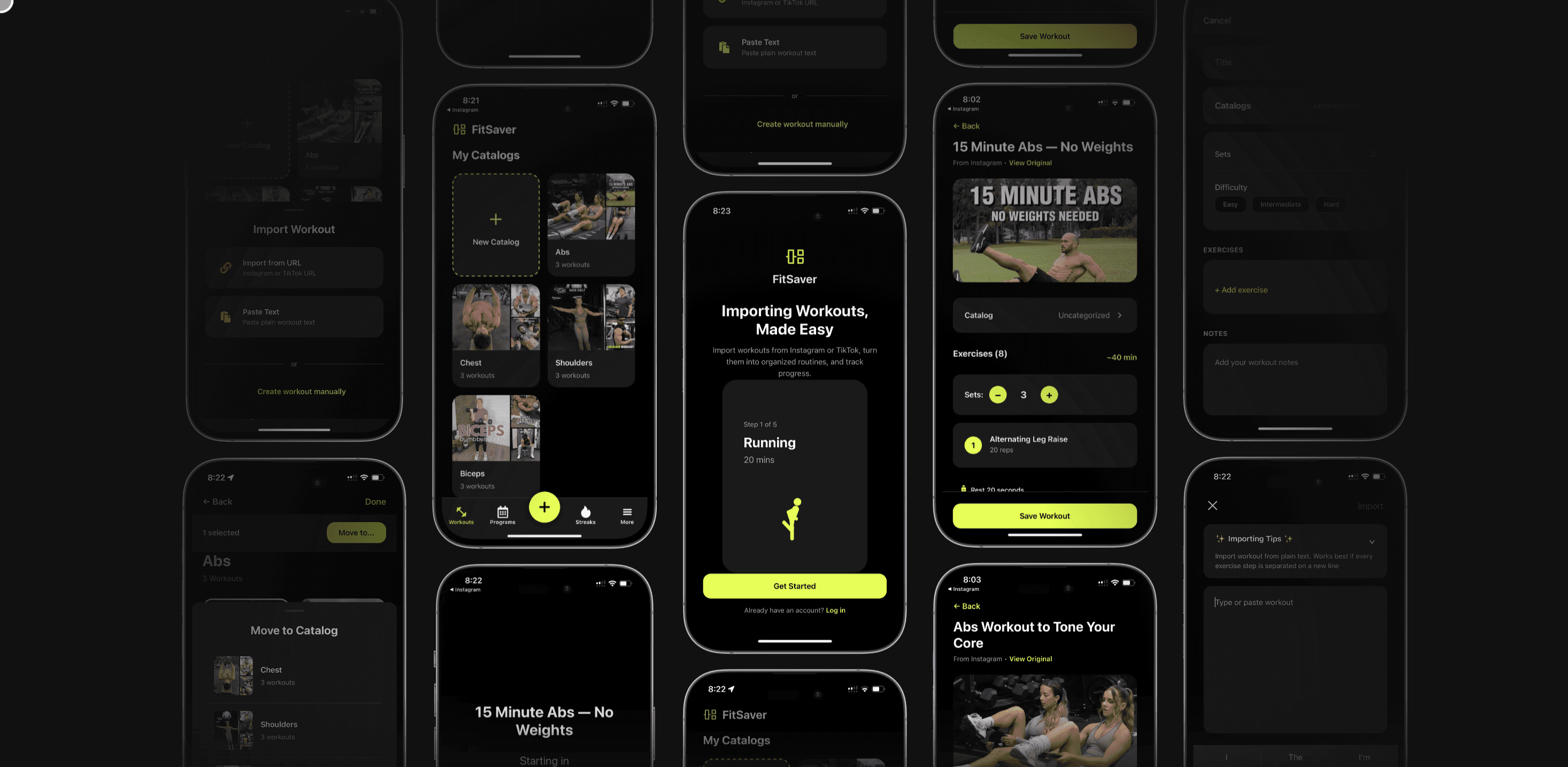
Fitsaver App fills that gap by converting saved Instagram and TikTok workout videos into organized routines: it timestamps, sequences, and adds timers so users can train with fewer interruptions.
How to Build a Balanced Yoga Exercise Workout
A balanced yoga session generally contains five components. Each one can be adapted to time constraints and goals.
Centering and Breathwork (2–10 minutes) — calm the nervous system and set intention.
Warm-up and Mobility (5–10 minutes) — dynamic movements to prime joints and muscles.
Main Practice (10–40+ minutes) — flows, strength-building sequences, or long holds depending on goals.
Cool-down (5–10 minutes) — gentle stretches to release tension.
Savasana / Restorative (3–10+ minutes) — integration and relaxation.
Designing for Different Goals
Not every session aims for the same outcome. Here’s how the main practice shifts with intent.
Flexibility: Longer holds (30–90 seconds) in hamstrings, hips, chest; use props for passive lengthening.
Strength: Repetitive flows with plank, chaturanga, lunges, and balance work; shorten holds, add pulses.
Mobility: Slow, joint-focused movement through full ranges with attention to breath.
Relaxation / Recovery: Gentle, supported poses and extended breathing to downregulate the nervous system.
Sample Yoga Exercise Workouts
Below are complete routines for common needs. Each one includes time cues, breath counts, and helpful alignment notes.
15-Minute Morning Energizing Flow (Beginner-Friendly)
1–2 minutes: Seated breath — 5 rounds of 4-4-6 (inhale- hold-exhale) or box breath for clarity.
2–5 minutes: Cat-Cow x 8, Thread-the-Needle each side x 6 breaths, Sun Salutation A (3 rounds) move with breath.
5–10 minutes: Warrior sequence — Crescent Lunge 5 breaths, Warrior II 5 breaths, Extended Side Angle 4 breaths, Reverse Warrior 3 breaths; switch sides.
10–13 minutes: Balancing — Tree Pose 4 breaths each or Eagle arms with leg wrap for 30 seconds each side.
13–15 minutes: Seated forward fold 5 breaths, gentle twist each side 3 breaths, Savasana 60–90 seconds.
Tip: Cue inhalation to expansive movements and exhalation to folding or grounding for rhythm and stability.
30-Minute Strength & Core Flow (Intermediate)
Warm-up 5 minutes: Sun Salutation A x 3 with 3 chaturangas (modify to knees if needed).
Main 20 minutes:
Plank to Side Plank sequence — 3 rounds: Plank 30 sec, Side Plank right 20 sec, Side Plank left 20 sec.
Chair Pose pulses — 3 sets of 30 seconds, rest 15 seconds between.
Warrior III holds — 3 x 20 seconds per side with micro-bends.
Core finisher: Boat Pose x 4 x 20-second holds with 10 seconds rest.
Cool-down 5 minutes: Pigeon pose 60 seconds each side, Supine Twist, Savasana 2–3 minutes.
20-Minute Restorative Session (Evening Wind-Down)
3 minutes: Supported child’s pose with bolster, long slow breaths.
8 minutes: Reclined bound angle (supported with blocks), knees fall open; focus on 6–8 second exhales.
6 minutes: Legs-up-the-wall (Viparita Karani) with deeper diaphragmatic breath.
3+ minutes: Savasana with guided 4–7–8 breathing or a short body scan.
Essential Pose Cues and Modifications
Good cues keep an exercise safe and effective. Here are alignment points for frequently used poses and quick modifications.
Downward-Facing Dog (Adho Mukha Svanasana)
Spread fingers wide, root through knuckles.
Lift hips high, keep a neutral spine, micro-bend knees if hamstrings are tight.
Modification: Hands on blocks or practice a half-dog with hands on an elevated surface.
Warrior II (Virabhadrasana II)
Front knee above ankle, back foot grounded, hips open to the side.
Gaze over front fingertips, avoid collapsing the chest forward.
Modification: Reduce depth of lunge or shorten stance for knee comfort.
Pigeon Pose
Square hips toward front of mat; use blocks under hip if it’s elevated.
Keep front shin as parallel to front of mat as comfortable — it’s okay if it isn’t.
Modification: Supine figure-four with foot on knee if IT band or hip is sensitive.
Breathwork and Mindfulness
Breath links movement and provides a tool to scale intensity. For a yoga exercise workout, three simple breath patterns are most useful:
Ujjayi Breath: Slight constriction at the back of the throat to create a soft ocean sound — excellent for flows and building heat.
Box Breath: 4-4-4-4 — great for centering and reducing anxiety before a practice.
4-6-8 or Extended Exhale: Calms the nervous system post-practice or during restorative poses.
Encourage practitioners to match breath with movement: inhale to open or lift, exhale to fold or stabilize.
Progression and Tracking: Making Yoga a Habit
Consistency beats intensity for long-term gains. For busy people, micro-habits—short, scheduled sessions—work best. Progression can be subtle and measured in several ways:
Increase practice frequency (e.g., 3 days → 5 days/week).
Lengthen hold times or add reps (e.g., Tree Pose from 20 to 45 seconds).
Advance technique (e.g., from knee chaturanga to full chaturanga).
Introduce weighted or balance challenges (light ankle weights or stability work).
Tracking helps maintain momentum. That’s where Fitsaver shines: it timestamps imported reels, sets timers, and records completed sessions so users can measure consistency, duration, and progression without digging through saved posts.
How Fitsaver Converts Reels Into Structured Yoga Exercise Workout Routines
Fitsaver App is designed for people who discover workouts on Instagram and TikTok and want to practice them in a focused, repeatable way. Here’s how the import process typically works and how users can turn a reel into a full yoga routine.
Step-by-Step: Importing Instagram Reels and TikTok Videos
Save the Reel or TikTok Link: In Instagram or TikTok, tap the share icon and select "Copy Link." If the creator enabled direct sharing, users can also save the video to their device.
Open Fitsaver: Launch the Fitsaver App. From the dashboard, select "Import" or tap the plus/add button to create a new routine.
Paste or Share the Link: Fitsaver supports pasting the copied URL. On mobile, users can also use the system share sheet: share to Fitsaver and let the app import the clip automatically.
Auto-Detect Exercises: Fitsaver analyzes the video and suggests a sequence with approximate timing (e.g., Sun Salutation A — 3 rounds). It may flag repeated moves and provide default reps/duration.
Edit the Routine: Adjust holds, sets, or order. Add warm-up, cool-down, or supplementary poses that the reel omitted (e.g., add breathing at the start or Savasana at the end).
Set Timers and Notes: Add timers for holds and rests, and include written cues or alignment notes. Users can tag the routine as "Flexibility," "Strength," "Morning," or "Evening."
Save to Schedule: Place the routine in the calendar at preferred times or create a repeat schedule (e.g., Monday/Wednesday/Friday). Fitsaver will remind the user and show the routine with cues and timers during the session.
Practice and Track: During the workout, Fitsaver runs the timers, shows the video snippet if desired, and records completion and duration for progress tracking.
Note: If a reel is private or the link is restricted, users may need to ask the creator for permission or save a public tutorial instead. Fitsaver emphasizes respectful use of creators’ content and encourages tagging or crediting the original instructor when sharing routines.
Troubleshooting Common Import Issues
Private/Reel Not Accessible: Request permission from the creator or use an alternative public post.
Auto-Detection Misses Moves: Manually add or edit steps. The auto-fill is a time-saver, not a replacement for human adjustment.
Video Quality/Orientation Problems: If the file doesn’t import correctly, download the video to the device first (when allowed) and upload directly into Fitsaver.
Copyright Concerns: Use imported content for personal practice. If sharing a full routine publicly, credit the creator and follow platform guidelines.
Creating a Weekly Yoga Plan Using Social Content
One reel can seed an entire week. Here’s a sample plan for someone with 30–45 minutes, five days a week, combining reels, curated sequencing, and progressive load.
Monday — Strength Flow (30–40 min): Import a strength-based vinyasa reel, add a 5-minute core circuit and 5-minute cooldown. Schedule on Fitsaver as "Strength Flow — M."
Tuesday — Mobility & Breath (30 min): Use a mobility reel for hips/shoulders, include 10 minutes of breathwork and 5 minutes of Savasana.
Wednesday — Active Recovery (20–30 min): Gentle sun salutations and restorative poses; use a calming reel as the anchor.
Thursday — Balance & Stability (30–40 min): Import a balance sequence reel, add progressive holds for stability and ankle/hip strengthening.
Friday — Creative Flow (45 min): Combine flowing reels with peak pose work (e.g., arm balance or inversion prep). Add longer warm-up and cooldown.
Fitsaver can keep each day organized, present the correct video segments during the session, and log completion to show weekly adherence.
How to Customize Imported Routines for Personal Needs
Every body is different. When a user imports a reel into Fitsaver, they should treat it as a template rather than a rulebook. Customization ideas:
Adjust Hold Times: If a pose recommends 60 seconds but the user is new, set 20–30 seconds and increase over time.
Add Modifiers: Insert notes like "use strap" or "drop to knee" for future reference.
Include Progression Steps: Add regression and progression nodes (e.g., "Try full chaturanga on week 4").
Swap Music or Silence: Choose whether to play audio from the original clip or mute it to focus on breath.
Equipment and Props
For most yoga exercise workouts, minimal equipment is needed. A few props can greatly expand accessibility and depth:
Yoga Mat: Non-slip surface for safety.
Blocks: For support in standing and seated poses.
Strap: For hamstring and shoulder assistance.
Bolster or Cushions: For restorative practice and comfort in longer holds.
Optional: Light ankle weights for strength-focused flows, or a yoga wheel for advanced backbends.
Common Mistakes and How to Avoid Them
Copying a Reel Exactly: Short videos often omit transitions and safety cues. Always add warm-up and cooldown and make alignment notes when importing.
Relying on Quantity Over Quality: Doing many poses quickly reduces benefit. Emphasize quality, breath connection, and alignment.
Ignoring Pain: Sharp pain is a stop sign. Differentiate between discomfort from stretching and pain from injury.
Skipping Tracking: Not logging progress reduces accountability. Use apps like Fitsaver to record completion, time, and notes.
Tips for Busy, Social-Media–Engaged Practitioners
People who find workouts via social platforms often have inconsistent schedules. Here are strategies to keep practice realistic and rewarding:
Micro Sessions: Save a 10-minute energizing flow for mornings; import one into Fitsaver and schedule as a daily recurring quick session.
Theme Days: Make Monday strength, Tuesday mobility, etc. This reduces decision fatigue when scrolling through saved content.
Batch Import: Once a week, import 3–5 reels into Fitsaver and slot them into the calendar. Preparation boosts adherence.
Set Reminders and Alarms: Use Fitsaver’s notification and timer features to create ritualized practice windows.
Use Social Accountability Wisely: Instead of mindless posting, share progress snapshots with friends or within communities for support.
Privacy, Permissions, and Ethical Considerations
Repurposing creators’ content requires respect. A few guidelines:
Use imported videos for personal practice unless the creator permits wider redistribution.
If sharing a routine publicly, credit the original creator and link back to the original reel.
Respect private accounts; request permission before importing or downloading their content.
Follow local copyright law and platform terms of service.
Real-Life Example: Turning a Viral Flow Into a Weekly Routine
Someone spots a 90-second vinyasa reel that emphasizes shoulder mobility and accessory core work. They want to integrate this into a plan without losing context or safety cues.
They copy the reel link from Instagram and paste it into Fitsaver’s import tool.
Fitsaver auto-detects a 3-move sequence and timestamps each segment. The user adds a 5-minute warm-up (cat-cow, wrist release) and a 5-minute cooldown (child’s pose, shoulder stretch).
They set timers: 45 seconds per move with 15 seconds rest, and schedule it for Tuesday and Thursday evenings.
After three weeks, Fitsaver’s log shows improved adherence. The user increases hold times and adds a progressed variation (plank shoulder taps) to increase difficulty.
That small loop — discover, import, tweak, practice, progress — turns one viral clip into a sustainable, measurable habit.
Integrating Strength and Mobility Cross-Training
Yoga is often framed as flexibility or mindfulness work, but it can be a potent strength and mobility tool. For athletes or gym-goers, Fitsaver can pair a yoga exercise workout alongside resistance sessions:
Use short yoga flows as warm-ups before weight training to prime movement patterns and joint health.
Schedule restorative yoga on heavy lifting days to aid recovery.
Import mobility-focused reels that target shoulders and hips to maintain range of motion as strength increases.
Measuring Success Beyond the Mat
Progress in yoga isn’t only about achieving arm balances. Here are objective and subjective measures to track:
Objective: Frequency of sessions, hold duration, number of flows completed, increased ROM measured in degrees or reach tests.
Subjective: Sleep quality, stress levels, ease of daily movement, reduced lower-back aches.
Fitsaver logs objective metrics automatically and encourages notes for subjective changes, making it easy to notice trends over weeks and months.
Sample 4-Week Progression Plan
A simple progression helps create momentum. This 4-week plan assumes 30 minutes, 4 times per week.
Week 1: Focus on technique—import gentle flow reels and practice with attention to breath.
Week 2: Increase hold times by 10–20% and add one challenging balance per session.
Week 3: Introduce strength elements—plank variations, lunges, chair pose pulses.
Week 4: Attempt a peak pose or longer flow, then reassess mobility and recovery needs.
Users who schedule these routines in Fitsaver will receive reminders and can review completion trends at the end of each week.
Final Thoughts
Converting a handful of entertaining reels into a meaningful yoga exercise workout is a practical way to turn discovery into discipline. By structuring sessions with warm-ups, main practice, and cooldowns, and by tracking progress, practitioners get more than ephemeral inspiration: they get results. Fitsaver App is built to bridge the gap between social discovery and sustained practice, allowing busy people to import, edit, schedule, and track yoga routines so each scroll can become a step forward on the mat.
Frequently Asked Questions
Can Fitsaver import any Instagram reel or TikTok video?
Fitsaver can import most public reels and TikTok videos via the copied link or share sheet. Videos from private accounts or with restricted sharing may not import; in those cases, users should request permission or choose public tutorials instead.
Is it legal to import someone else’s workout reel into Fitsaver?
Using a creator’s video for personal practice typically falls under acceptable personal use, but users should avoid redistributing the original content without permission. If a routine is shared publicly, credit the creator and follow platform copyright rules.
How does Fitsaver handle timing and repetitions from short clips?
Fitsaver auto-detects repeated moves and suggests default timings. Users can edit reps, sets, and hold durations to suit their level. The auto-detection is a starting point; manual tweaks personalize the routine.
Can users add notes or modifications to imported routines?
Yes. Fitsaver lets users add alignment cues, modification notes, and progression steps so the routine evolves with their practice.
What if someone has limited space or no mat?
Many yoga exercise workouts can be adapted to small spaces or done on a towel. Choose standing and seated sequences that don’t require wide ranges of motion, and use a non-slip surface to prevent sliding.
Summary
Social videos are a treasure trove of ideas — but they need structure to become effective fitness habits. A well-designed yoga exercise workout balances breath, mobility, strength, and rest. By importing reels and TikToks into a tool like Fitsaver, busy and social-media–engaged people can transform fleeting inspiration into scheduled, trackable, and progressive routines. With intentional customization, proper safety cues, and consistent tracking, what starts as a saved clip can become a sustainable path toward flexibility, strength, and calm.

A 15-minute yoga exercise workout seen as a scrolling stop on Instagram can become an anchor habit — if it’s organized, timed, and tracked. This guide shows how to build meaningful yoga routines from short reels and TikToks, teaches practical sequencing, and explains how Fitsaver App converts those saved videos into structured workouts so busy, social-media–savvy people can train without distraction.
Why Turn Reels Into Routines?
Short-form video revolutionized how people discover yoga. A creative flow, clever cueing, or a novel pose variation often hooks viewers. The problem: saved reels pile up in apps, but they rarely translate into consistent practice. Turning those clips into a repeatable yoga exercise workout solves three common problems
Structure: Short videos rarely include warm-ups, counters, or transitions for a full practice.
Focus: Jumping from one reel to another creates distraction and inefficient sessions.
Progress Tracking: Saved videos don’t record duration, frequency, or progression.
Fitsaver App fills that gap by converting saved Instagram and TikTok workout videos into organized routines: it timestamps, sequences, and adds timers so users can train with fewer interruptions.
How to Build a Balanced Yoga Exercise Workout
A balanced yoga session generally contains five components. Each one can be adapted to time constraints and goals.
Centering and Breathwork (2–10 minutes) — calm the nervous system and set intention.
Warm-up and Mobility (5–10 minutes) — dynamic movements to prime joints and muscles.
Main Practice (10–40+ minutes) — flows, strength-building sequences, or long holds depending on goals.
Cool-down (5–10 minutes) — gentle stretches to release tension.
Savasana / Restorative (3–10+ minutes) — integration and relaxation.
Designing for Different Goals
Not every session aims for the same outcome. Here’s how the main practice shifts with intent.
Flexibility: Longer holds (30–90 seconds) in hamstrings, hips, chest; use props for passive lengthening.
Strength: Repetitive flows with plank, chaturanga, lunges, and balance work; shorten holds, add pulses.
Mobility: Slow, joint-focused movement through full ranges with attention to breath.
Relaxation / Recovery: Gentle, supported poses and extended breathing to downregulate the nervous system.
Sample Yoga Exercise Workouts
Below are complete routines for common needs. Each one includes time cues, breath counts, and helpful alignment notes.
15-Minute Morning Energizing Flow (Beginner-Friendly)
1–2 minutes: Seated breath — 5 rounds of 4-4-6 (inhale- hold-exhale) or box breath for clarity.
2–5 minutes: Cat-Cow x 8, Thread-the-Needle each side x 6 breaths, Sun Salutation A (3 rounds) move with breath.
5–10 minutes: Warrior sequence — Crescent Lunge 5 breaths, Warrior II 5 breaths, Extended Side Angle 4 breaths, Reverse Warrior 3 breaths; switch sides.
10–13 minutes: Balancing — Tree Pose 4 breaths each or Eagle arms with leg wrap for 30 seconds each side.
13–15 minutes: Seated forward fold 5 breaths, gentle twist each side 3 breaths, Savasana 60–90 seconds.
Tip: Cue inhalation to expansive movements and exhalation to folding or grounding for rhythm and stability.
30-Minute Strength & Core Flow (Intermediate)
Warm-up 5 minutes: Sun Salutation A x 3 with 3 chaturangas (modify to knees if needed).
Main 20 minutes:
Plank to Side Plank sequence — 3 rounds: Plank 30 sec, Side Plank right 20 sec, Side Plank left 20 sec.
Chair Pose pulses — 3 sets of 30 seconds, rest 15 seconds between.
Warrior III holds — 3 x 20 seconds per side with micro-bends.
Core finisher: Boat Pose x 4 x 20-second holds with 10 seconds rest.
Cool-down 5 minutes: Pigeon pose 60 seconds each side, Supine Twist, Savasana 2–3 minutes.
20-Minute Restorative Session (Evening Wind-Down)
3 minutes: Supported child’s pose with bolster, long slow breaths.
8 minutes: Reclined bound angle (supported with blocks), knees fall open; focus on 6–8 second exhales.
6 minutes: Legs-up-the-wall (Viparita Karani) with deeper diaphragmatic breath.
3+ minutes: Savasana with guided 4–7–8 breathing or a short body scan.
Essential Pose Cues and Modifications
Good cues keep an exercise safe and effective. Here are alignment points for frequently used poses and quick modifications.
Downward-Facing Dog (Adho Mukha Svanasana)
Spread fingers wide, root through knuckles.
Lift hips high, keep a neutral spine, micro-bend knees if hamstrings are tight.
Modification: Hands on blocks or practice a half-dog with hands on an elevated surface.
Warrior II (Virabhadrasana II)
Front knee above ankle, back foot grounded, hips open to the side.
Gaze over front fingertips, avoid collapsing the chest forward.
Modification: Reduce depth of lunge or shorten stance for knee comfort.
Pigeon Pose
Square hips toward front of mat; use blocks under hip if it’s elevated.
Keep front shin as parallel to front of mat as comfortable — it’s okay if it isn’t.
Modification: Supine figure-four with foot on knee if IT band or hip is sensitive.
Breathwork and Mindfulness
Breath links movement and provides a tool to scale intensity. For a yoga exercise workout, three simple breath patterns are most useful:
Ujjayi Breath: Slight constriction at the back of the throat to create a soft ocean sound — excellent for flows and building heat.
Box Breath: 4-4-4-4 — great for centering and reducing anxiety before a practice.
4-6-8 or Extended Exhale: Calms the nervous system post-practice or during restorative poses.
Encourage practitioners to match breath with movement: inhale to open or lift, exhale to fold or stabilize.
Progression and Tracking: Making Yoga a Habit
Consistency beats intensity for long-term gains. For busy people, micro-habits—short, scheduled sessions—work best. Progression can be subtle and measured in several ways:
Increase practice frequency (e.g., 3 days → 5 days/week).
Lengthen hold times or add reps (e.g., Tree Pose from 20 to 45 seconds).
Advance technique (e.g., from knee chaturanga to full chaturanga).
Introduce weighted or balance challenges (light ankle weights or stability work).
Tracking helps maintain momentum. That’s where Fitsaver shines: it timestamps imported reels, sets timers, and records completed sessions so users can measure consistency, duration, and progression without digging through saved posts.
How Fitsaver Converts Reels Into Structured Yoga Exercise Workout Routines
Fitsaver App is designed for people who discover workouts on Instagram and TikTok and want to practice them in a focused, repeatable way. Here’s how the import process typically works and how users can turn a reel into a full yoga routine.
Step-by-Step: Importing Instagram Reels and TikTok Videos
Save the Reel or TikTok Link: In Instagram or TikTok, tap the share icon and select "Copy Link." If the creator enabled direct sharing, users can also save the video to their device.
Open Fitsaver: Launch the Fitsaver App. From the dashboard, select "Import" or tap the plus/add button to create a new routine.
Paste or Share the Link: Fitsaver supports pasting the copied URL. On mobile, users can also use the system share sheet: share to Fitsaver and let the app import the clip automatically.
Auto-Detect Exercises: Fitsaver analyzes the video and suggests a sequence with approximate timing (e.g., Sun Salutation A — 3 rounds). It may flag repeated moves and provide default reps/duration.
Edit the Routine: Adjust holds, sets, or order. Add warm-up, cool-down, or supplementary poses that the reel omitted (e.g., add breathing at the start or Savasana at the end).
Set Timers and Notes: Add timers for holds and rests, and include written cues or alignment notes. Users can tag the routine as "Flexibility," "Strength," "Morning," or "Evening."
Save to Schedule: Place the routine in the calendar at preferred times or create a repeat schedule (e.g., Monday/Wednesday/Friday). Fitsaver will remind the user and show the routine with cues and timers during the session.
Practice and Track: During the workout, Fitsaver runs the timers, shows the video snippet if desired, and records completion and duration for progress tracking.
Note: If a reel is private or the link is restricted, users may need to ask the creator for permission or save a public tutorial instead. Fitsaver emphasizes respectful use of creators’ content and encourages tagging or crediting the original instructor when sharing routines.
Troubleshooting Common Import Issues
Private/Reel Not Accessible: Request permission from the creator or use an alternative public post.
Auto-Detection Misses Moves: Manually add or edit steps. The auto-fill is a time-saver, not a replacement for human adjustment.
Video Quality/Orientation Problems: If the file doesn’t import correctly, download the video to the device first (when allowed) and upload directly into Fitsaver.
Copyright Concerns: Use imported content for personal practice. If sharing a full routine publicly, credit the creator and follow platform guidelines.
Creating a Weekly Yoga Plan Using Social Content
One reel can seed an entire week. Here’s a sample plan for someone with 30–45 minutes, five days a week, combining reels, curated sequencing, and progressive load.
Monday — Strength Flow (30–40 min): Import a strength-based vinyasa reel, add a 5-minute core circuit and 5-minute cooldown. Schedule on Fitsaver as "Strength Flow — M."
Tuesday — Mobility & Breath (30 min): Use a mobility reel for hips/shoulders, include 10 minutes of breathwork and 5 minutes of Savasana.
Wednesday — Active Recovery (20–30 min): Gentle sun salutations and restorative poses; use a calming reel as the anchor.
Thursday — Balance & Stability (30–40 min): Import a balance sequence reel, add progressive holds for stability and ankle/hip strengthening.
Friday — Creative Flow (45 min): Combine flowing reels with peak pose work (e.g., arm balance or inversion prep). Add longer warm-up and cooldown.
Fitsaver can keep each day organized, present the correct video segments during the session, and log completion to show weekly adherence.
How to Customize Imported Routines for Personal Needs
Every body is different. When a user imports a reel into Fitsaver, they should treat it as a template rather than a rulebook. Customization ideas:
Adjust Hold Times: If a pose recommends 60 seconds but the user is new, set 20–30 seconds and increase over time.
Add Modifiers: Insert notes like "use strap" or "drop to knee" for future reference.
Include Progression Steps: Add regression and progression nodes (e.g., "Try full chaturanga on week 4").
Swap Music or Silence: Choose whether to play audio from the original clip or mute it to focus on breath.
Equipment and Props
For most yoga exercise workouts, minimal equipment is needed. A few props can greatly expand accessibility and depth:
Yoga Mat: Non-slip surface for safety.
Blocks: For support in standing and seated poses.
Strap: For hamstring and shoulder assistance.
Bolster or Cushions: For restorative practice and comfort in longer holds.
Optional: Light ankle weights for strength-focused flows, or a yoga wheel for advanced backbends.
Common Mistakes and How to Avoid Them
Copying a Reel Exactly: Short videos often omit transitions and safety cues. Always add warm-up and cooldown and make alignment notes when importing.
Relying on Quantity Over Quality: Doing many poses quickly reduces benefit. Emphasize quality, breath connection, and alignment.
Ignoring Pain: Sharp pain is a stop sign. Differentiate between discomfort from stretching and pain from injury.
Skipping Tracking: Not logging progress reduces accountability. Use apps like Fitsaver to record completion, time, and notes.
Tips for Busy, Social-Media–Engaged Practitioners
People who find workouts via social platforms often have inconsistent schedules. Here are strategies to keep practice realistic and rewarding:
Micro Sessions: Save a 10-minute energizing flow for mornings; import one into Fitsaver and schedule as a daily recurring quick session.
Theme Days: Make Monday strength, Tuesday mobility, etc. This reduces decision fatigue when scrolling through saved content.
Batch Import: Once a week, import 3–5 reels into Fitsaver and slot them into the calendar. Preparation boosts adherence.
Set Reminders and Alarms: Use Fitsaver’s notification and timer features to create ritualized practice windows.
Use Social Accountability Wisely: Instead of mindless posting, share progress snapshots with friends or within communities for support.
Privacy, Permissions, and Ethical Considerations
Repurposing creators’ content requires respect. A few guidelines:
Use imported videos for personal practice unless the creator permits wider redistribution.
If sharing a routine publicly, credit the original creator and link back to the original reel.
Respect private accounts; request permission before importing or downloading their content.
Follow local copyright law and platform terms of service.
Real-Life Example: Turning a Viral Flow Into a Weekly Routine
Someone spots a 90-second vinyasa reel that emphasizes shoulder mobility and accessory core work. They want to integrate this into a plan without losing context or safety cues.
They copy the reel link from Instagram and paste it into Fitsaver’s import tool.
Fitsaver auto-detects a 3-move sequence and timestamps each segment. The user adds a 5-minute warm-up (cat-cow, wrist release) and a 5-minute cooldown (child’s pose, shoulder stretch).
They set timers: 45 seconds per move with 15 seconds rest, and schedule it for Tuesday and Thursday evenings.
After three weeks, Fitsaver’s log shows improved adherence. The user increases hold times and adds a progressed variation (plank shoulder taps) to increase difficulty.
That small loop — discover, import, tweak, practice, progress — turns one viral clip into a sustainable, measurable habit.
Integrating Strength and Mobility Cross-Training
Yoga is often framed as flexibility or mindfulness work, but it can be a potent strength and mobility tool. For athletes or gym-goers, Fitsaver can pair a yoga exercise workout alongside resistance sessions:
Use short yoga flows as warm-ups before weight training to prime movement patterns and joint health.
Schedule restorative yoga on heavy lifting days to aid recovery.
Import mobility-focused reels that target shoulders and hips to maintain range of motion as strength increases.
Measuring Success Beyond the Mat
Progress in yoga isn’t only about achieving arm balances. Here are objective and subjective measures to track:
Objective: Frequency of sessions, hold duration, number of flows completed, increased ROM measured in degrees or reach tests.
Subjective: Sleep quality, stress levels, ease of daily movement, reduced lower-back aches.
Fitsaver logs objective metrics automatically and encourages notes for subjective changes, making it easy to notice trends over weeks and months.
Sample 4-Week Progression Plan
A simple progression helps create momentum. This 4-week plan assumes 30 minutes, 4 times per week.
Week 1: Focus on technique—import gentle flow reels and practice with attention to breath.
Week 2: Increase hold times by 10–20% and add one challenging balance per session.
Week 3: Introduce strength elements—plank variations, lunges, chair pose pulses.
Week 4: Attempt a peak pose or longer flow, then reassess mobility and recovery needs.
Users who schedule these routines in Fitsaver will receive reminders and can review completion trends at the end of each week.
Final Thoughts
Converting a handful of entertaining reels into a meaningful yoga exercise workout is a practical way to turn discovery into discipline. By structuring sessions with warm-ups, main practice, and cooldowns, and by tracking progress, practitioners get more than ephemeral inspiration: they get results. Fitsaver App is built to bridge the gap between social discovery and sustained practice, allowing busy people to import, edit, schedule, and track yoga routines so each scroll can become a step forward on the mat.
Frequently Asked Questions
Can Fitsaver import any Instagram reel or TikTok video?
Fitsaver can import most public reels and TikTok videos via the copied link or share sheet. Videos from private accounts or with restricted sharing may not import; in those cases, users should request permission or choose public tutorials instead.
Is it legal to import someone else’s workout reel into Fitsaver?
Using a creator’s video for personal practice typically falls under acceptable personal use, but users should avoid redistributing the original content without permission. If a routine is shared publicly, credit the creator and follow platform copyright rules.
How does Fitsaver handle timing and repetitions from short clips?
Fitsaver auto-detects repeated moves and suggests default timings. Users can edit reps, sets, and hold durations to suit their level. The auto-detection is a starting point; manual tweaks personalize the routine.
Can users add notes or modifications to imported routines?
Yes. Fitsaver lets users add alignment cues, modification notes, and progression steps so the routine evolves with their practice.
What if someone has limited space or no mat?
Many yoga exercise workouts can be adapted to small spaces or done on a towel. Choose standing and seated sequences that don’t require wide ranges of motion, and use a non-slip surface to prevent sliding.
Summary
Social videos are a treasure trove of ideas — but they need structure to become effective fitness habits. A well-designed yoga exercise workout balances breath, mobility, strength, and rest. By importing reels and TikToks into a tool like Fitsaver, busy and social-media–engaged people can transform fleeting inspiration into scheduled, trackable, and progressive routines. With intentional customization, proper safety cues, and consistent tracking, what starts as a saved clip can become a sustainable path toward flexibility, strength, and calm.
A 15-minute yoga exercise workout seen as a scrolling stop on Instagram can become an anchor habit — if it’s organized, timed, and tracked. This guide shows how to build meaningful yoga routines from short reels and TikToks, teaches practical sequencing, and explains how Fitsaver App converts those saved videos into structured workouts so busy, social-media–savvy people can train without distraction.
Why Turn Reels Into Routines?
Short-form video revolutionized how people discover yoga. A creative flow, clever cueing, or a novel pose variation often hooks viewers. The problem: saved reels pile up in apps, but they rarely translate into consistent practice. Turning those clips into a repeatable yoga exercise workout solves three common problems
Structure: Short videos rarely include warm-ups, counters, or transitions for a full practice.
Focus: Jumping from one reel to another creates distraction and inefficient sessions.
Progress Tracking: Saved videos don’t record duration, frequency, or progression.
Fitsaver App fills that gap by converting saved Instagram and TikTok workout videos into organized routines: it timestamps, sequences, and adds timers so users can train with fewer interruptions.
How to Build a Balanced Yoga Exercise Workout
A balanced yoga session generally contains five components. Each one can be adapted to time constraints and goals.
Centering and Breathwork (2–10 minutes) — calm the nervous system and set intention.
Warm-up and Mobility (5–10 minutes) — dynamic movements to prime joints and muscles.
Main Practice (10–40+ minutes) — flows, strength-building sequences, or long holds depending on goals.
Cool-down (5–10 minutes) — gentle stretches to release tension.
Savasana / Restorative (3–10+ minutes) — integration and relaxation.
Designing for Different Goals
Not every session aims for the same outcome. Here’s how the main practice shifts with intent.
Flexibility: Longer holds (30–90 seconds) in hamstrings, hips, chest; use props for passive lengthening.
Strength: Repetitive flows with plank, chaturanga, lunges, and balance work; shorten holds, add pulses.
Mobility: Slow, joint-focused movement through full ranges with attention to breath.
Relaxation / Recovery: Gentle, supported poses and extended breathing to downregulate the nervous system.
Sample Yoga Exercise Workouts
Below are complete routines for common needs. Each one includes time cues, breath counts, and helpful alignment notes.
15-Minute Morning Energizing Flow (Beginner-Friendly)
1–2 minutes: Seated breath — 5 rounds of 4-4-6 (inhale- hold-exhale) or box breath for clarity.
2–5 minutes: Cat-Cow x 8, Thread-the-Needle each side x 6 breaths, Sun Salutation A (3 rounds) move with breath.
5–10 minutes: Warrior sequence — Crescent Lunge 5 breaths, Warrior II 5 breaths, Extended Side Angle 4 breaths, Reverse Warrior 3 breaths; switch sides.
10–13 minutes: Balancing — Tree Pose 4 breaths each or Eagle arms with leg wrap for 30 seconds each side.
13–15 minutes: Seated forward fold 5 breaths, gentle twist each side 3 breaths, Savasana 60–90 seconds.
Tip: Cue inhalation to expansive movements and exhalation to folding or grounding for rhythm and stability.
30-Minute Strength & Core Flow (Intermediate)
Warm-up 5 minutes: Sun Salutation A x 3 with 3 chaturangas (modify to knees if needed).
Main 20 minutes:
Plank to Side Plank sequence — 3 rounds: Plank 30 sec, Side Plank right 20 sec, Side Plank left 20 sec.
Chair Pose pulses — 3 sets of 30 seconds, rest 15 seconds between.
Warrior III holds — 3 x 20 seconds per side with micro-bends.
Core finisher: Boat Pose x 4 x 20-second holds with 10 seconds rest.
Cool-down 5 minutes: Pigeon pose 60 seconds each side, Supine Twist, Savasana 2–3 minutes.
20-Minute Restorative Session (Evening Wind-Down)
3 minutes: Supported child’s pose with bolster, long slow breaths.
8 minutes: Reclined bound angle (supported with blocks), knees fall open; focus on 6–8 second exhales.
6 minutes: Legs-up-the-wall (Viparita Karani) with deeper diaphragmatic breath.
3+ minutes: Savasana with guided 4–7–8 breathing or a short body scan.
Essential Pose Cues and Modifications
Good cues keep an exercise safe and effective. Here are alignment points for frequently used poses and quick modifications.
Downward-Facing Dog (Adho Mukha Svanasana)
Spread fingers wide, root through knuckles.
Lift hips high, keep a neutral spine, micro-bend knees if hamstrings are tight.
Modification: Hands on blocks or practice a half-dog with hands on an elevated surface.
Warrior II (Virabhadrasana II)
Front knee above ankle, back foot grounded, hips open to the side.
Gaze over front fingertips, avoid collapsing the chest forward.
Modification: Reduce depth of lunge or shorten stance for knee comfort.
Pigeon Pose
Square hips toward front of mat; use blocks under hip if it’s elevated.
Keep front shin as parallel to front of mat as comfortable — it’s okay if it isn’t.
Modification: Supine figure-four with foot on knee if IT band or hip is sensitive.
Breathwork and Mindfulness
Breath links movement and provides a tool to scale intensity. For a yoga exercise workout, three simple breath patterns are most useful:
Ujjayi Breath: Slight constriction at the back of the throat to create a soft ocean sound — excellent for flows and building heat.
Box Breath: 4-4-4-4 — great for centering and reducing anxiety before a practice.
4-6-8 or Extended Exhale: Calms the nervous system post-practice or during restorative poses.
Encourage practitioners to match breath with movement: inhale to open or lift, exhale to fold or stabilize.
Progression and Tracking: Making Yoga a Habit
Consistency beats intensity for long-term gains. For busy people, micro-habits—short, scheduled sessions—work best. Progression can be subtle and measured in several ways:
Increase practice frequency (e.g., 3 days → 5 days/week).
Lengthen hold times or add reps (e.g., Tree Pose from 20 to 45 seconds).
Advance technique (e.g., from knee chaturanga to full chaturanga).
Introduce weighted or balance challenges (light ankle weights or stability work).
Tracking helps maintain momentum. That’s where Fitsaver shines: it timestamps imported reels, sets timers, and records completed sessions so users can measure consistency, duration, and progression without digging through saved posts.
How Fitsaver Converts Reels Into Structured Yoga Exercise Workout Routines
Fitsaver App is designed for people who discover workouts on Instagram and TikTok and want to practice them in a focused, repeatable way. Here’s how the import process typically works and how users can turn a reel into a full yoga routine.
Step-by-Step: Importing Instagram Reels and TikTok Videos
Save the Reel or TikTok Link: In Instagram or TikTok, tap the share icon and select "Copy Link." If the creator enabled direct sharing, users can also save the video to their device.
Open Fitsaver: Launch the Fitsaver App. From the dashboard, select "Import" or tap the plus/add button to create a new routine.
Paste or Share the Link: Fitsaver supports pasting the copied URL. On mobile, users can also use the system share sheet: share to Fitsaver and let the app import the clip automatically.
Auto-Detect Exercises: Fitsaver analyzes the video and suggests a sequence with approximate timing (e.g., Sun Salutation A — 3 rounds). It may flag repeated moves and provide default reps/duration.
Edit the Routine: Adjust holds, sets, or order. Add warm-up, cool-down, or supplementary poses that the reel omitted (e.g., add breathing at the start or Savasana at the end).
Set Timers and Notes: Add timers for holds and rests, and include written cues or alignment notes. Users can tag the routine as "Flexibility," "Strength," "Morning," or "Evening."
Save to Schedule: Place the routine in the calendar at preferred times or create a repeat schedule (e.g., Monday/Wednesday/Friday). Fitsaver will remind the user and show the routine with cues and timers during the session.
Practice and Track: During the workout, Fitsaver runs the timers, shows the video snippet if desired, and records completion and duration for progress tracking.
Note: If a reel is private or the link is restricted, users may need to ask the creator for permission or save a public tutorial instead. Fitsaver emphasizes respectful use of creators’ content and encourages tagging or crediting the original instructor when sharing routines.
Troubleshooting Common Import Issues
Private/Reel Not Accessible: Request permission from the creator or use an alternative public post.
Auto-Detection Misses Moves: Manually add or edit steps. The auto-fill is a time-saver, not a replacement for human adjustment.
Video Quality/Orientation Problems: If the file doesn’t import correctly, download the video to the device first (when allowed) and upload directly into Fitsaver.
Copyright Concerns: Use imported content for personal practice. If sharing a full routine publicly, credit the creator and follow platform guidelines.
Creating a Weekly Yoga Plan Using Social Content
One reel can seed an entire week. Here’s a sample plan for someone with 30–45 minutes, five days a week, combining reels, curated sequencing, and progressive load.
Monday — Strength Flow (30–40 min): Import a strength-based vinyasa reel, add a 5-minute core circuit and 5-minute cooldown. Schedule on Fitsaver as "Strength Flow — M."
Tuesday — Mobility & Breath (30 min): Use a mobility reel for hips/shoulders, include 10 minutes of breathwork and 5 minutes of Savasana.
Wednesday — Active Recovery (20–30 min): Gentle sun salutations and restorative poses; use a calming reel as the anchor.
Thursday — Balance & Stability (30–40 min): Import a balance sequence reel, add progressive holds for stability and ankle/hip strengthening.
Friday — Creative Flow (45 min): Combine flowing reels with peak pose work (e.g., arm balance or inversion prep). Add longer warm-up and cooldown.
Fitsaver can keep each day organized, present the correct video segments during the session, and log completion to show weekly adherence.
How to Customize Imported Routines for Personal Needs
Every body is different. When a user imports a reel into Fitsaver, they should treat it as a template rather than a rulebook. Customization ideas:
Adjust Hold Times: If a pose recommends 60 seconds but the user is new, set 20–30 seconds and increase over time.
Add Modifiers: Insert notes like "use strap" or "drop to knee" for future reference.
Include Progression Steps: Add regression and progression nodes (e.g., "Try full chaturanga on week 4").
Swap Music or Silence: Choose whether to play audio from the original clip or mute it to focus on breath.
Equipment and Props
For most yoga exercise workouts, minimal equipment is needed. A few props can greatly expand accessibility and depth:
Yoga Mat: Non-slip surface for safety.
Blocks: For support in standing and seated poses.
Strap: For hamstring and shoulder assistance.
Bolster or Cushions: For restorative practice and comfort in longer holds.
Optional: Light ankle weights for strength-focused flows, or a yoga wheel for advanced backbends.
Common Mistakes and How to Avoid Them
Copying a Reel Exactly: Short videos often omit transitions and safety cues. Always add warm-up and cooldown and make alignment notes when importing.
Relying on Quantity Over Quality: Doing many poses quickly reduces benefit. Emphasize quality, breath connection, and alignment.
Ignoring Pain: Sharp pain is a stop sign. Differentiate between discomfort from stretching and pain from injury.
Skipping Tracking: Not logging progress reduces accountability. Use apps like Fitsaver to record completion, time, and notes.
Tips for Busy, Social-Media–Engaged Practitioners
People who find workouts via social platforms often have inconsistent schedules. Here are strategies to keep practice realistic and rewarding:
Micro Sessions: Save a 10-minute energizing flow for mornings; import one into Fitsaver and schedule as a daily recurring quick session.
Theme Days: Make Monday strength, Tuesday mobility, etc. This reduces decision fatigue when scrolling through saved content.
Batch Import: Once a week, import 3–5 reels into Fitsaver and slot them into the calendar. Preparation boosts adherence.
Set Reminders and Alarms: Use Fitsaver’s notification and timer features to create ritualized practice windows.
Use Social Accountability Wisely: Instead of mindless posting, share progress snapshots with friends or within communities for support.
Privacy, Permissions, and Ethical Considerations
Repurposing creators’ content requires respect. A few guidelines:
Use imported videos for personal practice unless the creator permits wider redistribution.
If sharing a routine publicly, credit the original creator and link back to the original reel.
Respect private accounts; request permission before importing or downloading their content.
Follow local copyright law and platform terms of service.
Real-Life Example: Turning a Viral Flow Into a Weekly Routine
Someone spots a 90-second vinyasa reel that emphasizes shoulder mobility and accessory core work. They want to integrate this into a plan without losing context or safety cues.
They copy the reel link from Instagram and paste it into Fitsaver’s import tool.
Fitsaver auto-detects a 3-move sequence and timestamps each segment. The user adds a 5-minute warm-up (cat-cow, wrist release) and a 5-minute cooldown (child’s pose, shoulder stretch).
They set timers: 45 seconds per move with 15 seconds rest, and schedule it for Tuesday and Thursday evenings.
After three weeks, Fitsaver’s log shows improved adherence. The user increases hold times and adds a progressed variation (plank shoulder taps) to increase difficulty.
That small loop — discover, import, tweak, practice, progress — turns one viral clip into a sustainable, measurable habit.
Integrating Strength and Mobility Cross-Training
Yoga is often framed as flexibility or mindfulness work, but it can be a potent strength and mobility tool. For athletes or gym-goers, Fitsaver can pair a yoga exercise workout alongside resistance sessions:
Use short yoga flows as warm-ups before weight training to prime movement patterns and joint health.
Schedule restorative yoga on heavy lifting days to aid recovery.
Import mobility-focused reels that target shoulders and hips to maintain range of motion as strength increases.
Measuring Success Beyond the Mat
Progress in yoga isn’t only about achieving arm balances. Here are objective and subjective measures to track:
Objective: Frequency of sessions, hold duration, number of flows completed, increased ROM measured in degrees or reach tests.
Subjective: Sleep quality, stress levels, ease of daily movement, reduced lower-back aches.
Fitsaver logs objective metrics automatically and encourages notes for subjective changes, making it easy to notice trends over weeks and months.
Sample 4-Week Progression Plan
A simple progression helps create momentum. This 4-week plan assumes 30 minutes, 4 times per week.
Week 1: Focus on technique—import gentle flow reels and practice with attention to breath.
Week 2: Increase hold times by 10–20% and add one challenging balance per session.
Week 3: Introduce strength elements—plank variations, lunges, chair pose pulses.
Week 4: Attempt a peak pose or longer flow, then reassess mobility and recovery needs.
Users who schedule these routines in Fitsaver will receive reminders and can review completion trends at the end of each week.
Final Thoughts
Converting a handful of entertaining reels into a meaningful yoga exercise workout is a practical way to turn discovery into discipline. By structuring sessions with warm-ups, main practice, and cooldowns, and by tracking progress, practitioners get more than ephemeral inspiration: they get results. Fitsaver App is built to bridge the gap between social discovery and sustained practice, allowing busy people to import, edit, schedule, and track yoga routines so each scroll can become a step forward on the mat.
Frequently Asked Questions
Can Fitsaver import any Instagram reel or TikTok video?
Fitsaver can import most public reels and TikTok videos via the copied link or share sheet. Videos from private accounts or with restricted sharing may not import; in those cases, users should request permission or choose public tutorials instead.
Is it legal to import someone else’s workout reel into Fitsaver?
Using a creator’s video for personal practice typically falls under acceptable personal use, but users should avoid redistributing the original content without permission. If a routine is shared publicly, credit the creator and follow platform copyright rules.
How does Fitsaver handle timing and repetitions from short clips?
Fitsaver auto-detects repeated moves and suggests default timings. Users can edit reps, sets, and hold durations to suit their level. The auto-detection is a starting point; manual tweaks personalize the routine.
Can users add notes or modifications to imported routines?
Yes. Fitsaver lets users add alignment cues, modification notes, and progression steps so the routine evolves with their practice.
What if someone has limited space or no mat?
Many yoga exercise workouts can be adapted to small spaces or done on a towel. Choose standing and seated sequences that don’t require wide ranges of motion, and use a non-slip surface to prevent sliding.
Summary
Social videos are a treasure trove of ideas — but they need structure to become effective fitness habits. A well-designed yoga exercise workout balances breath, mobility, strength, and rest. By importing reels and TikToks into a tool like Fitsaver, busy and social-media–engaged people can transform fleeting inspiration into scheduled, trackable, and progressive routines. With intentional customization, proper safety cues, and consistent tracking, what starts as a saved clip can become a sustainable path toward flexibility, strength, and calm.